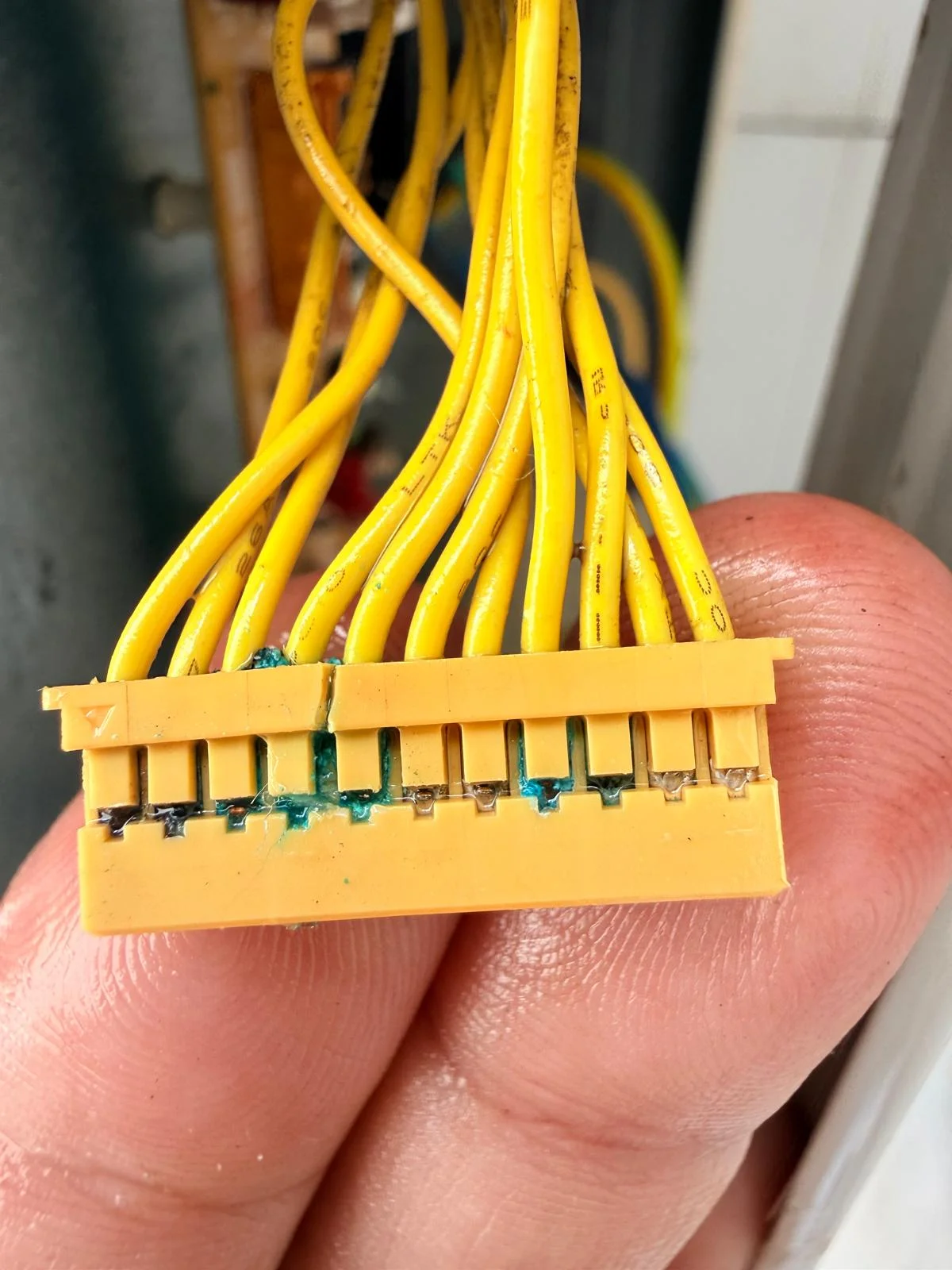
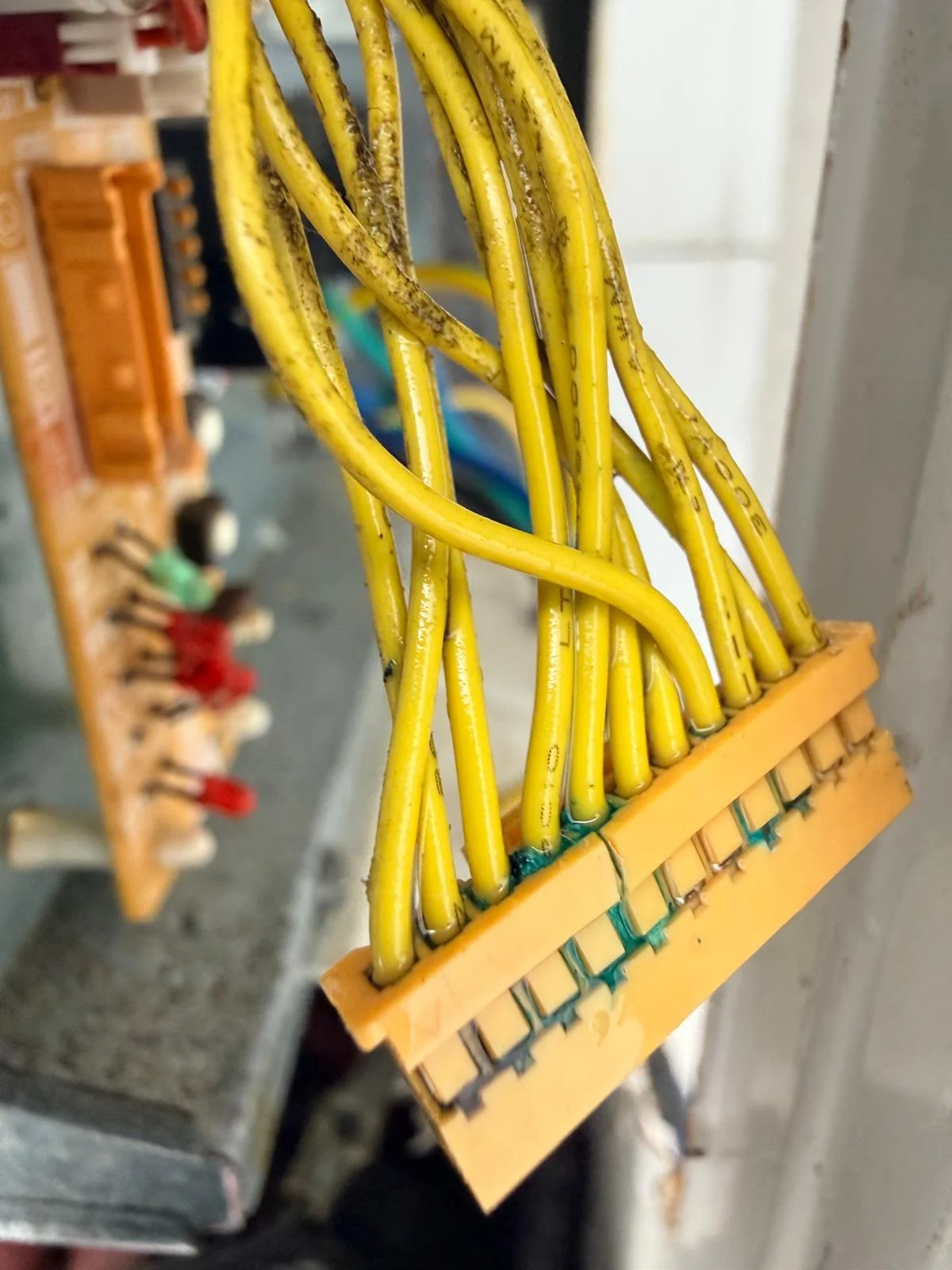
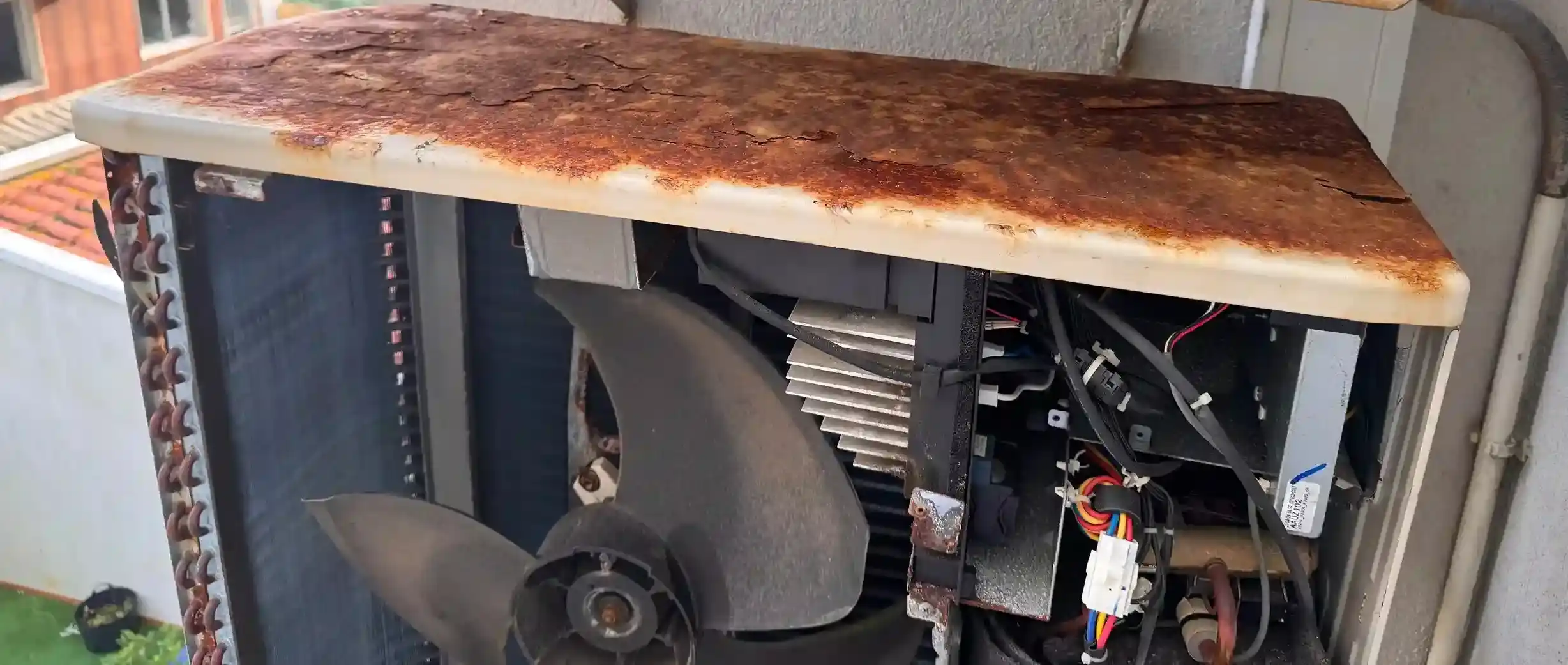
1) Durability far below what’s reasonable
An aerothermal heat pump isn’t a disposable appliance; it’s the home’s central thermal system. With a cost above €6,000 (plus installation), it’s reasonable to expect a service life of at least 15–20 years, as commonly assumed for this kind of energy solution.
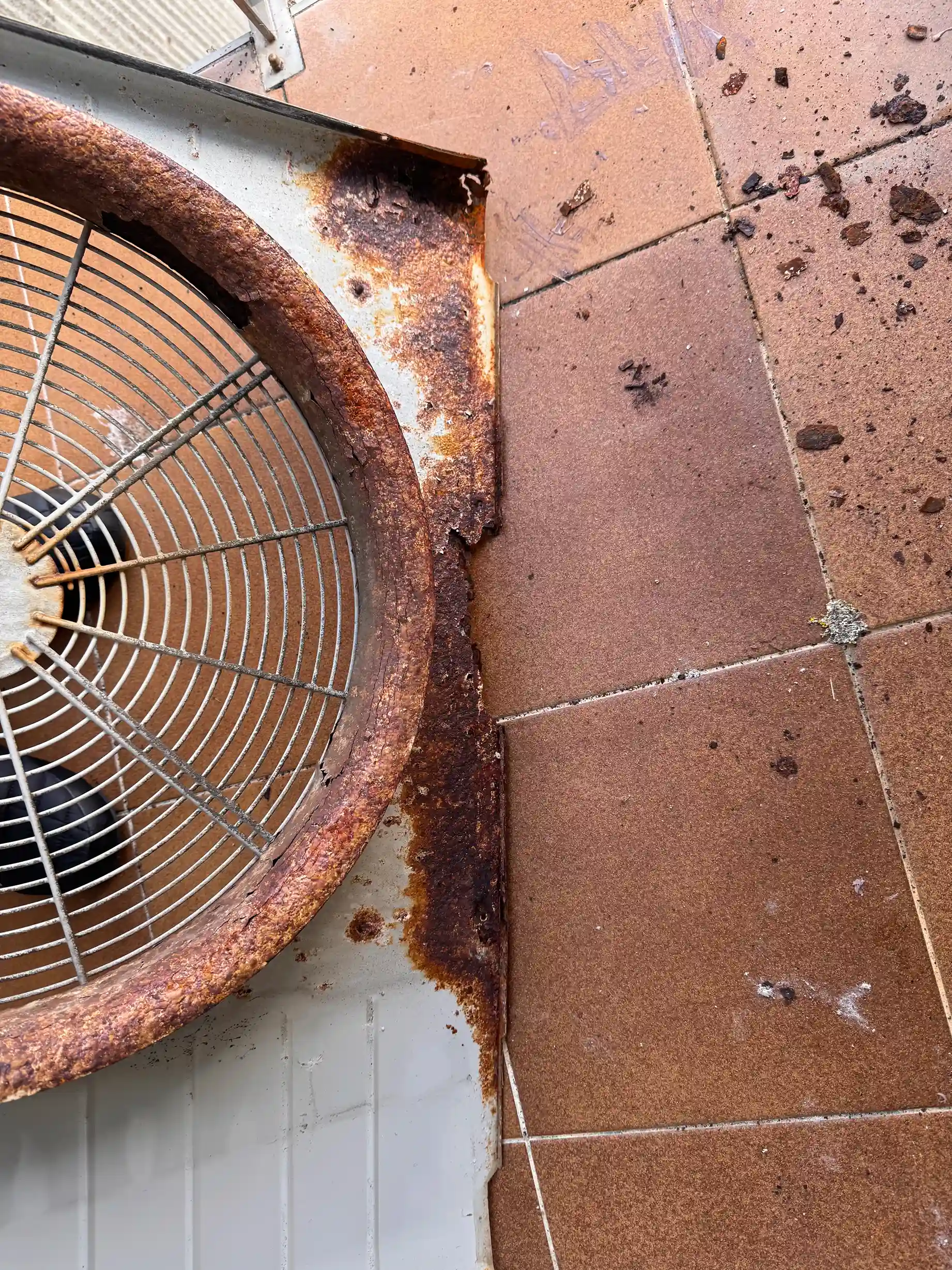
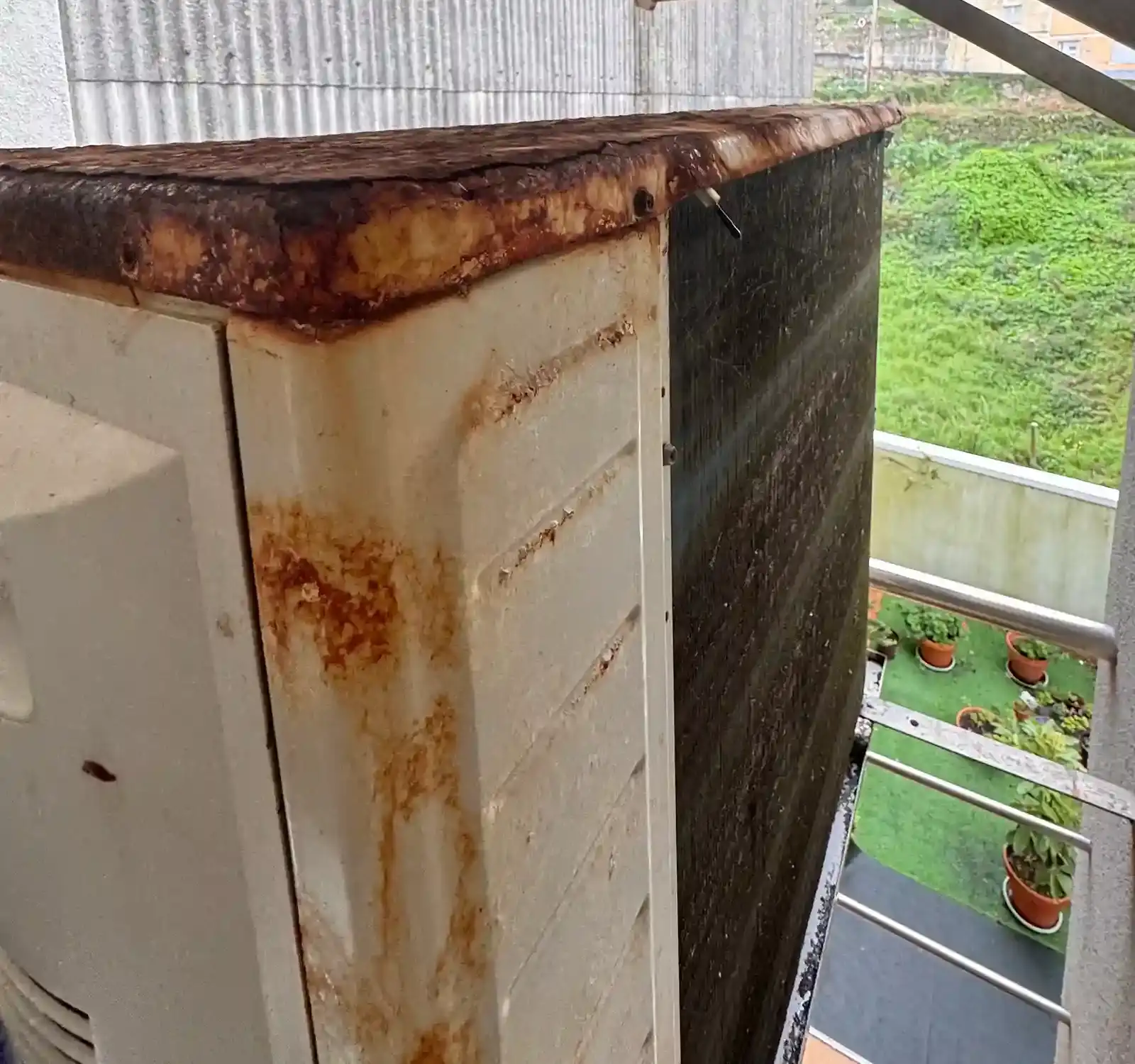
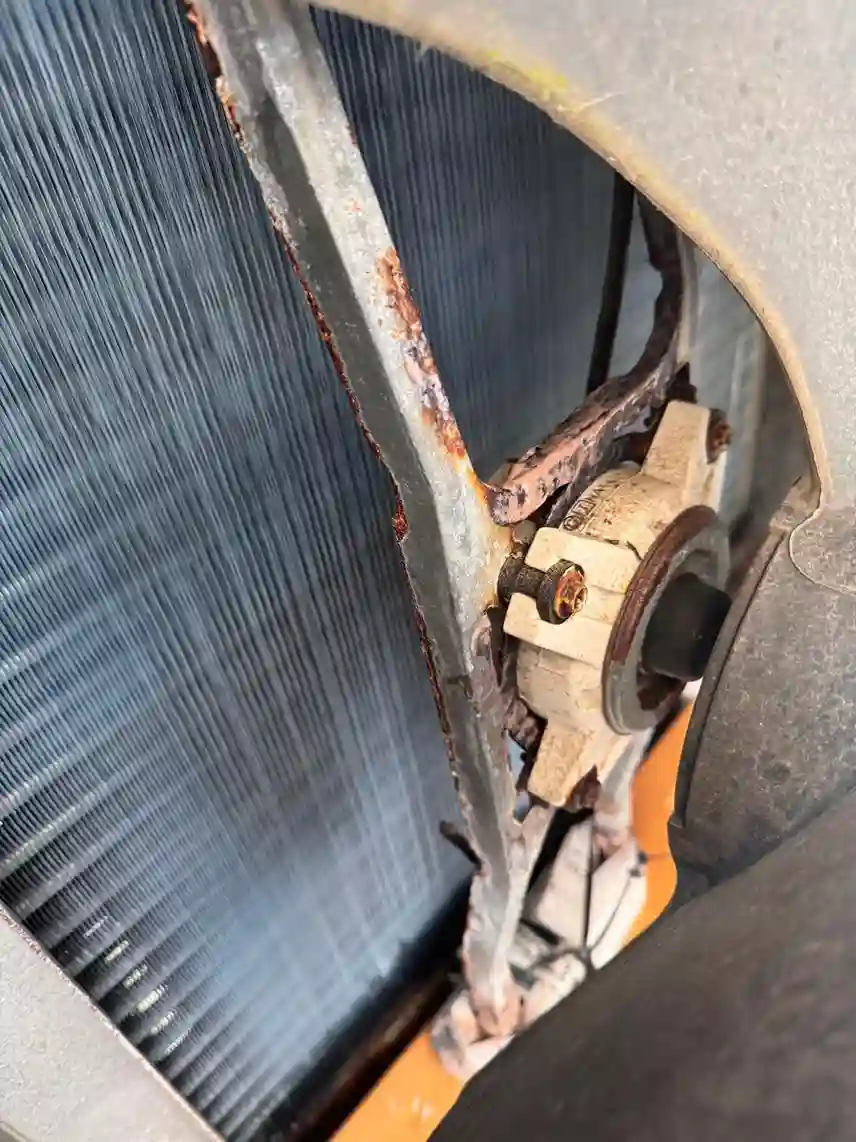
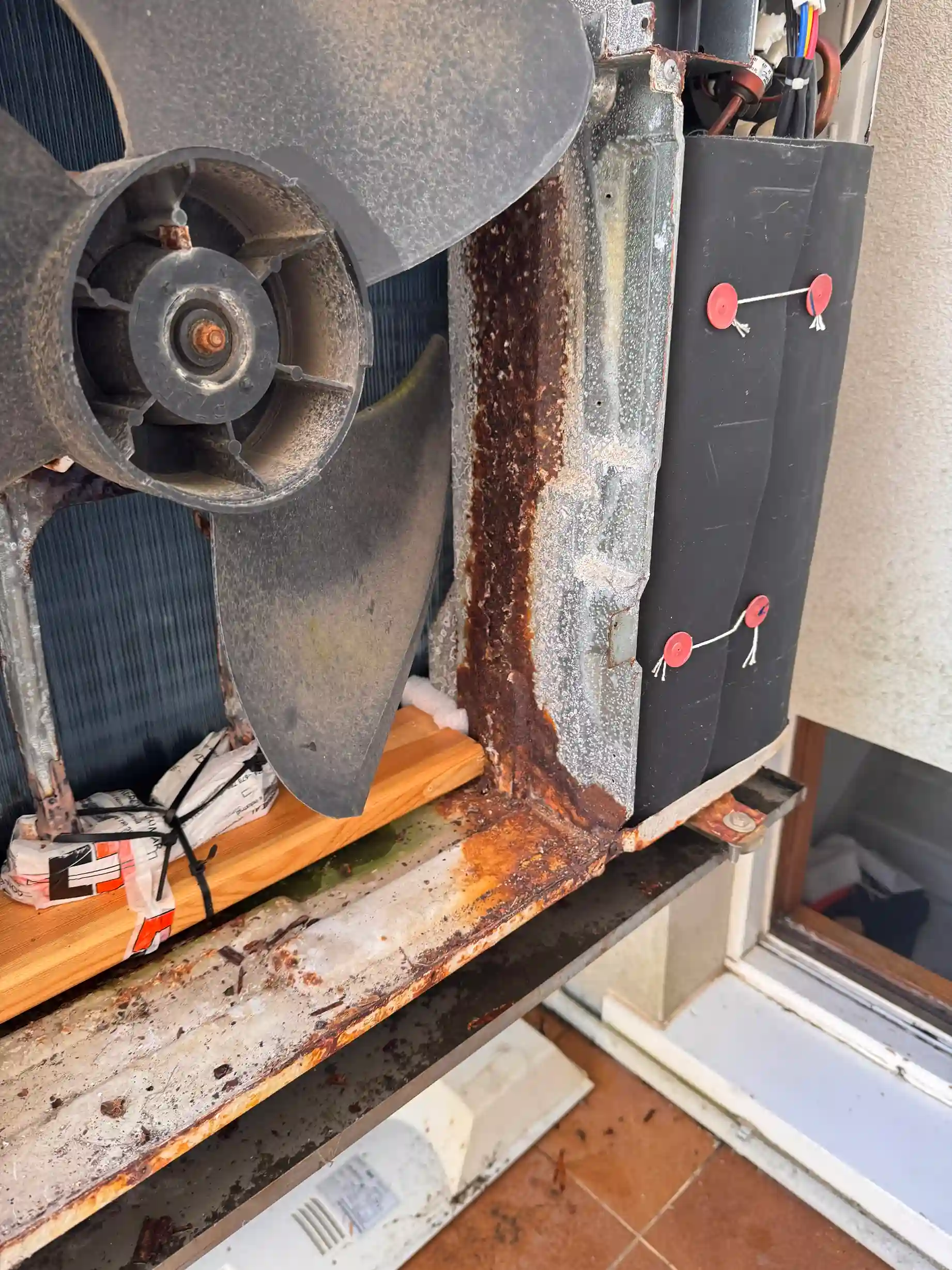
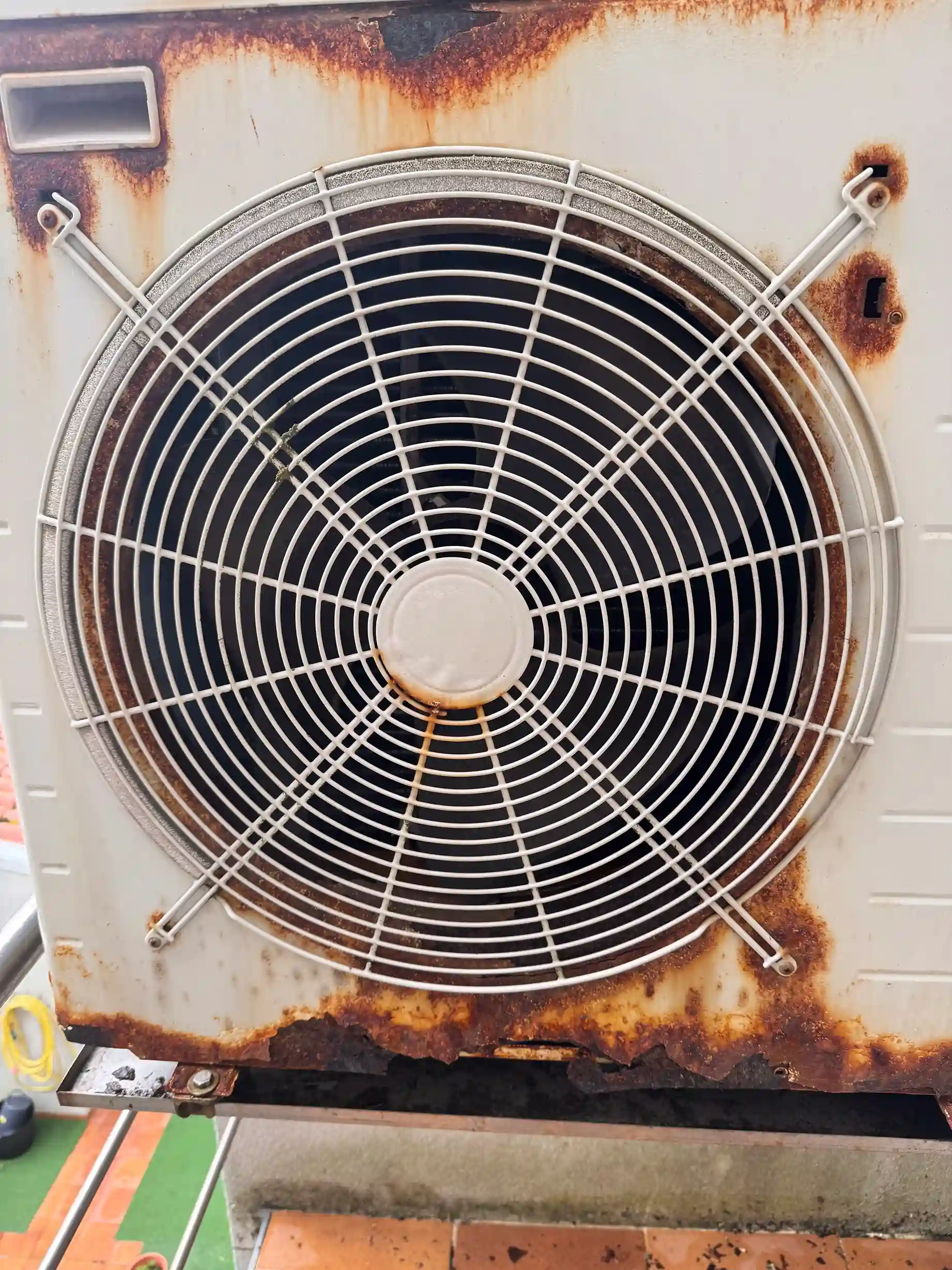
In this case, before 9 years, the system shows: severe structural corrosion, recurrent electronic failures, and a clear loss of reliability.
👉 This cannot be described as normal wear.
👉 It’s durability clearly below what can be expected for a product in this category.
An aerothermal system should not degrade before it has paid for itself.
2) Widespread premature corrosion
The corrosion is not limited to a single component or cosmetic damage. In this case it affects: fan, electronic boards, structural supports, outer frame and screws.
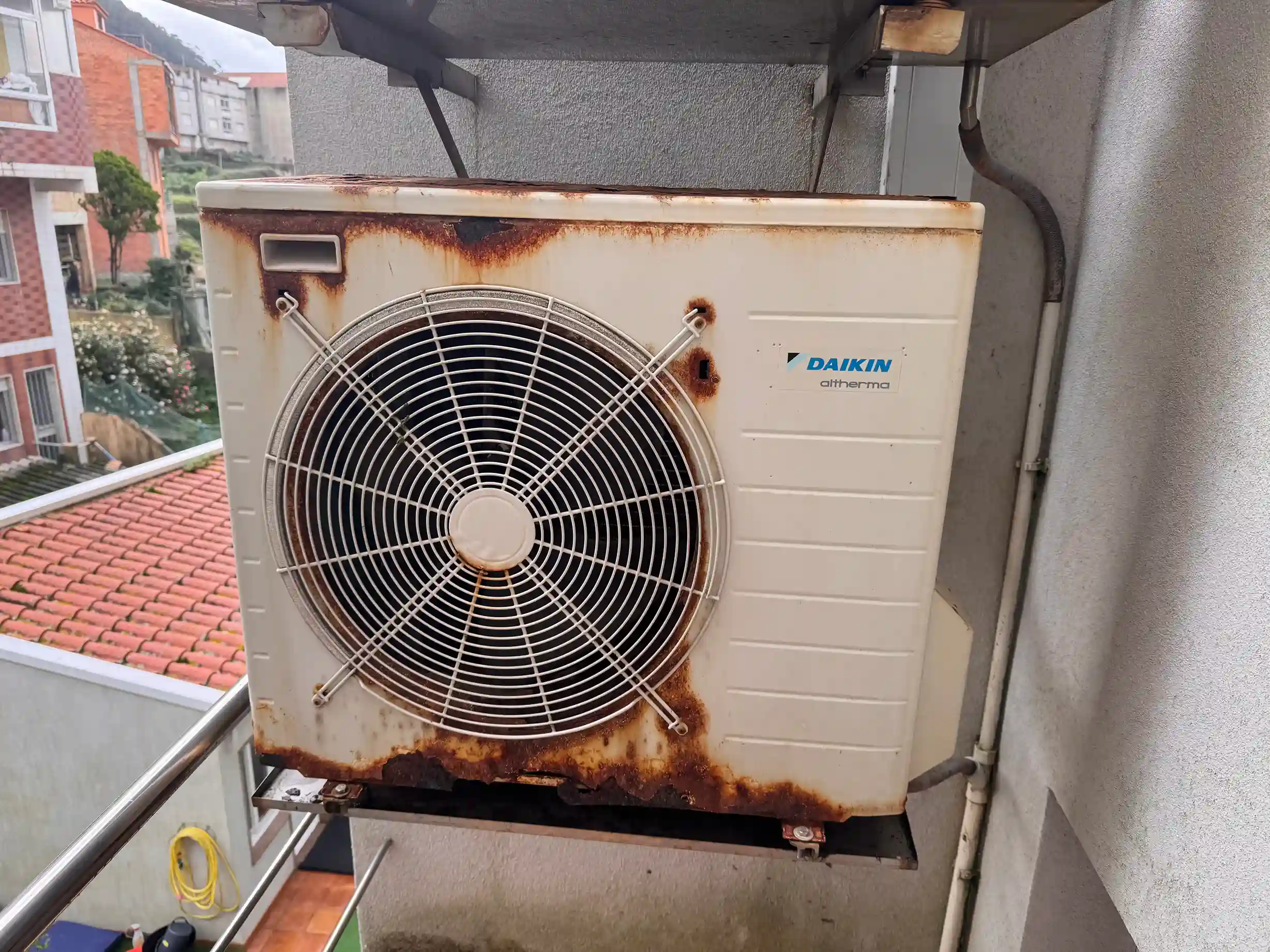
These are critical components for operation and safety, not just covers.
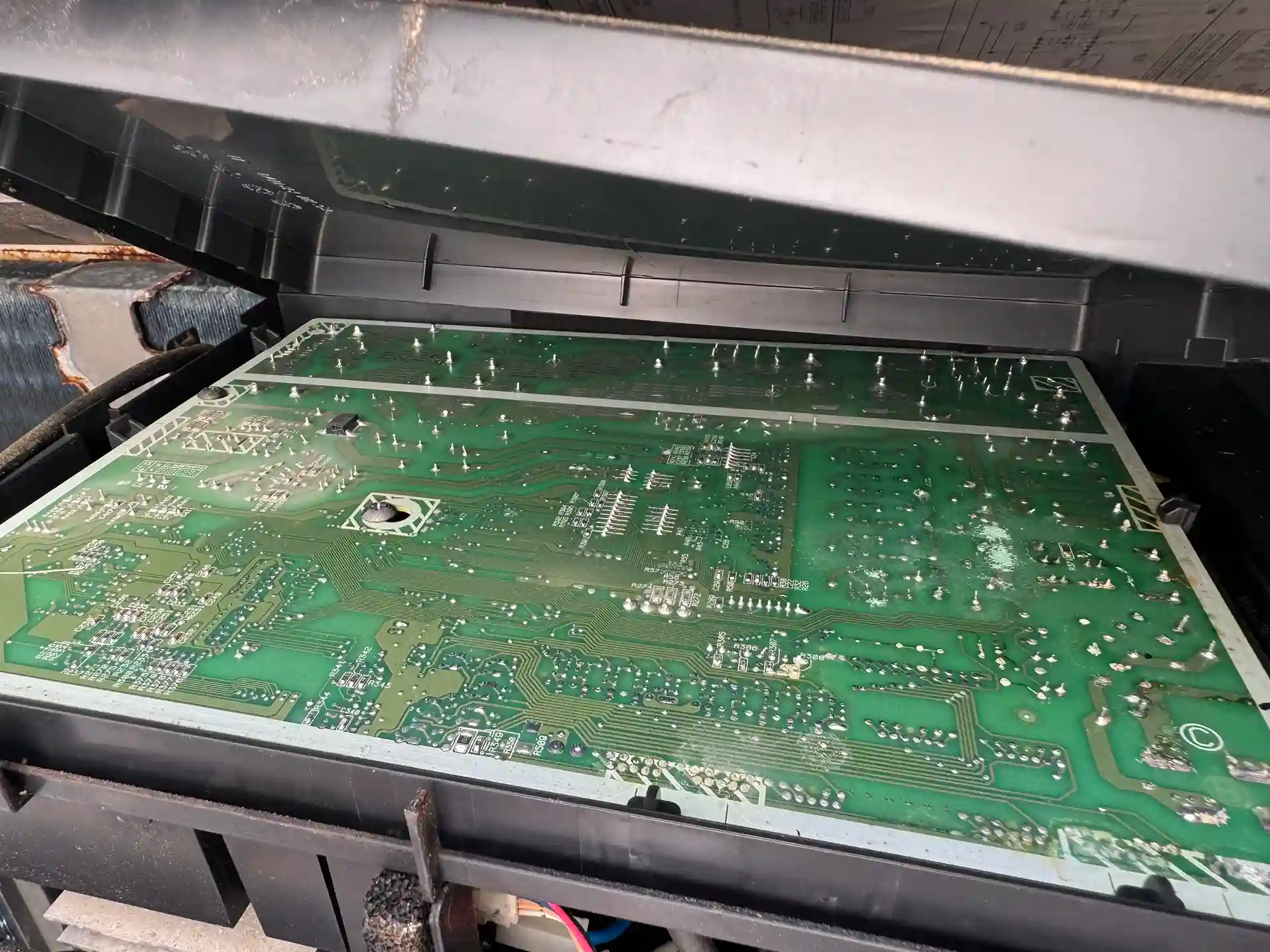
In environments with high humidity and salty air—like many coastal areas—this accelerates dramatically and compromises the unit’s lifespan.
👉 Corrosion is not a minor detail: it’s the beginning of the end.
When corrosion reaches the structure and electronics, the problem is not truly repairable long-term.
3) In my experience, if you live in a coastal town, Daikin Altherma is not designed to last
Daikin Spain acknowledges in writing that in coastal environments corrosion cannot be prevented—only delayed.
This is key, because it implies the manufacturer assumes premature degradation even with proper maintenance.
The question is inevitable:
👉 According to what Daikin states, in coastal areas corrosion cannot be prevented, only delayed. In my case, this raises a concern: why isn’t this limitation clearly explained before the sale?
Many coastal towns are not “extreme conditions”—they’re normal environments where other equipment reaches its expected lifespan.
Admitting the issue after the sale does not protect the consumer.
4) Maintenance does not solve the root problem
Faced with corrosion, Daikin Spain insists on purchasing periodic maintenance.
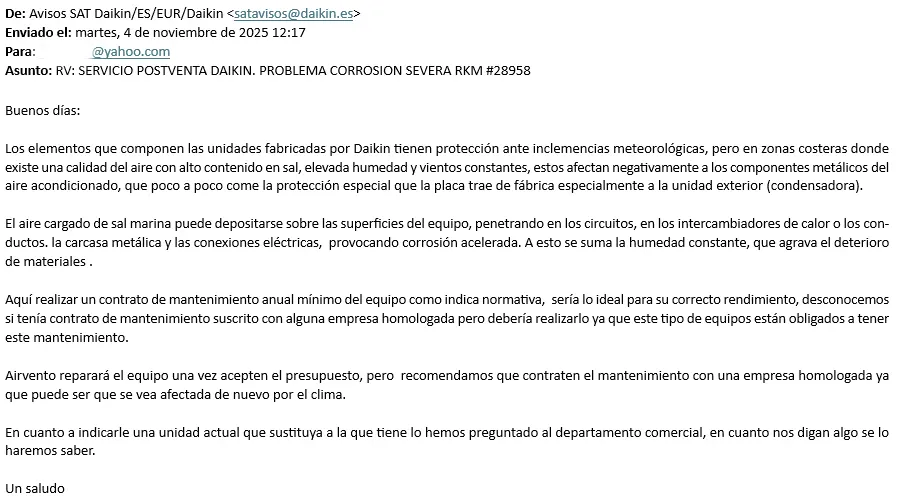
However, the manufacturer itself acknowledges that maintenance does not prevent corrosion; it can only delay it.
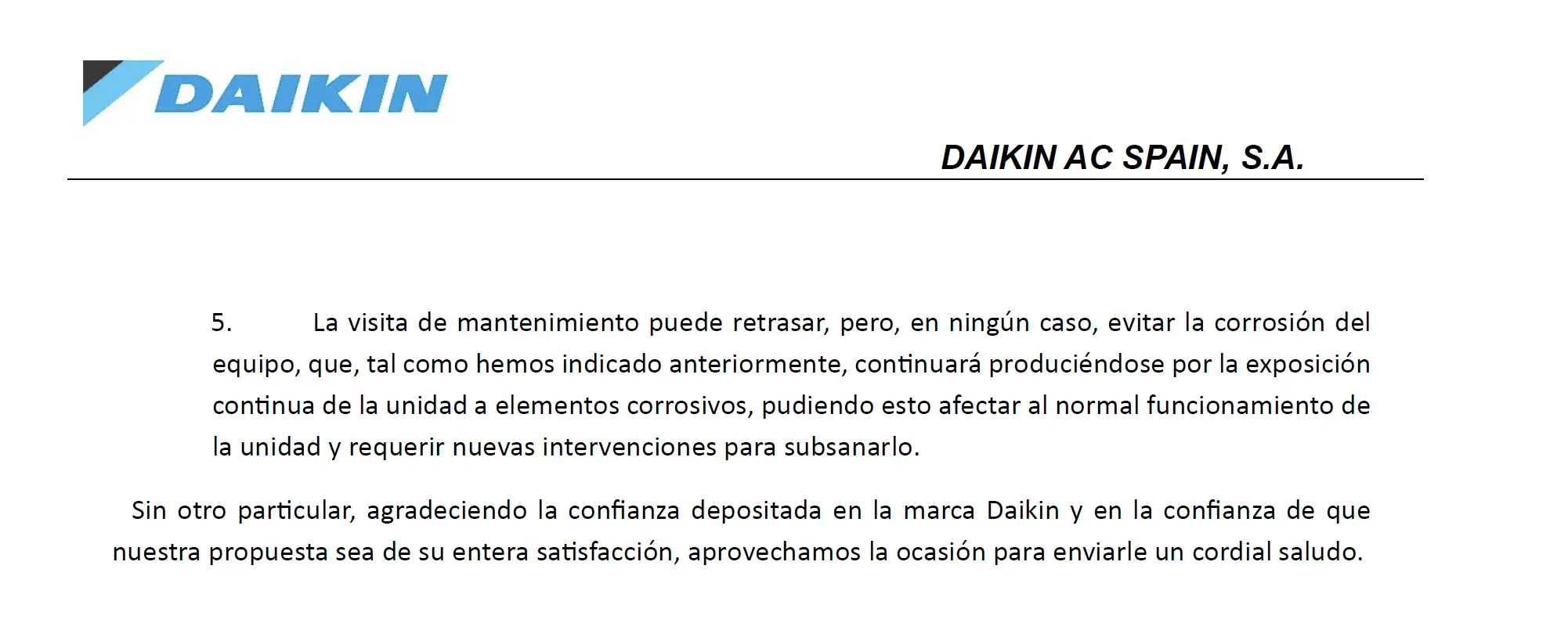
This is a clear contradiction: the customer is pushed into a recurring cost without a real solution to the underlying issue.
👉 Maintenance cannot compensate for insufficient anti-corrosion protection in design or materials.
👉 It shifts the problem to the consumer without fixing it.
Maintenance should not be an excuse for inadequate design. In this case, the unit was periodically rinsed with fresh water and additional anti-corrosion actions were carried out.
5) Slow and ineffective customer support for a basic need
Daikin Spain customer service was clearly insufficient in a context where an essential service was at stake: heating and domestic hot water for a family home with children.
For weeks: inquiries were bounced between departments, key questions went unanswered, quotes were not sent, no clear case owner was assigned, and replies arrived days or weeks late—while the home had no heating or hot water in late autumn/winter, with indoor temperatures incompatible with normal living.
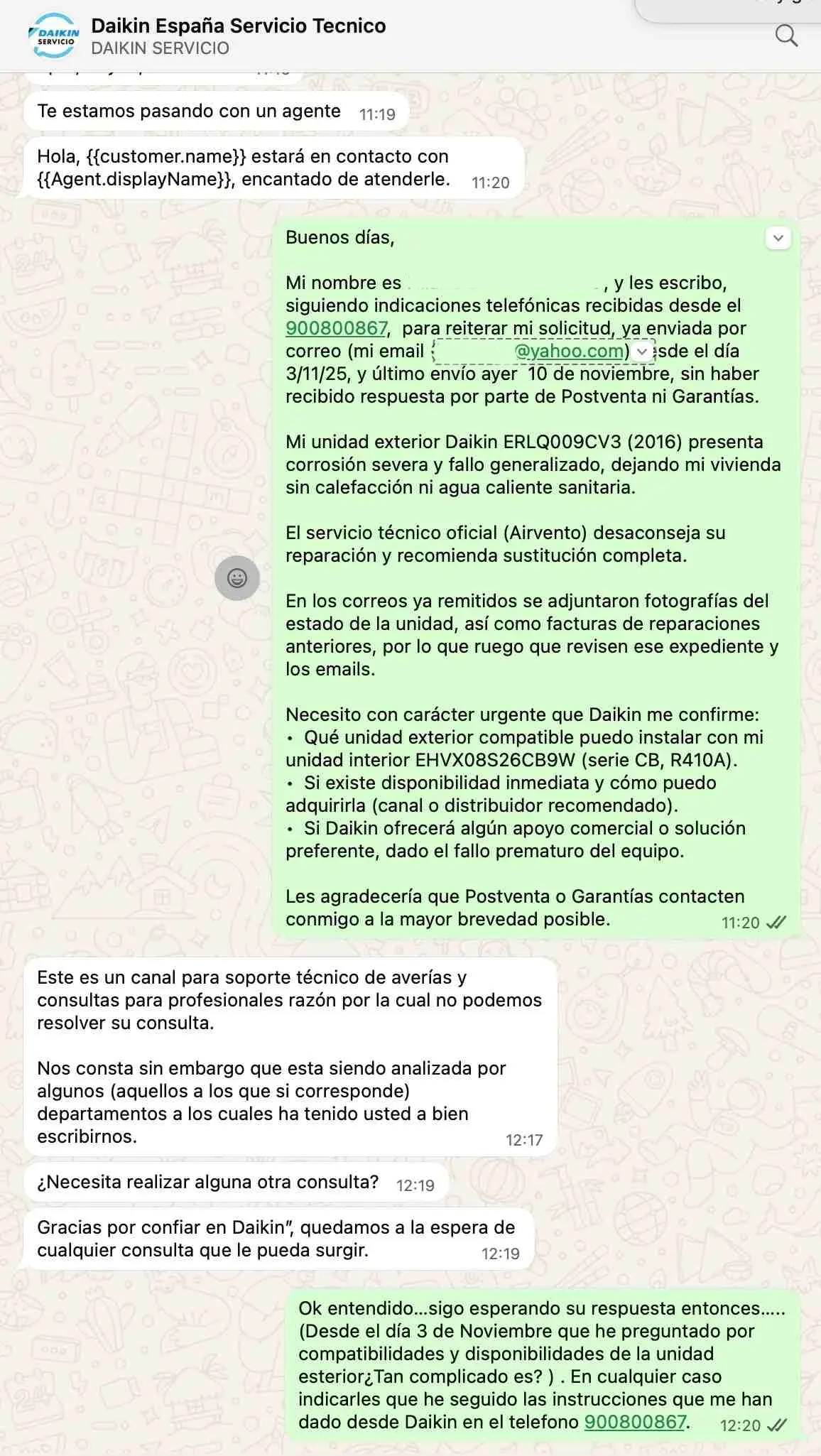
When a family has no heating, customer support cannot run at bureaucratic speed.
6) Spare parts logistics unworthy of a “premium” brand
Daikin positions itself as a leading aerothermal brand, but spare parts logistics were far below that standard.
In this case: several parts were declared “available” yet were not shipped until a week after accepting and paying the quote; they took 12 days to reach the official service provider; other simple metal parts had delivery times of up to 60 days.
Meanwhile, the household remained without a basic service.
👉 Slow logistics may be acceptable for secondary products.
👉 Not when it’s a home’s heating and hot water.
A premium brand cannot take weeks to ship parts while a family waits without heating.
* After 60 days I’m still waiting for some replacement parts.
7) Repairs with no guarantee of success
The first repair proposal was to replace electronic boards even though the outdoor unit had widespread structural corrosion. The worst part: the service provider did not guarantee full operation after the work. In other words: an expensive, partial repair with no guarantee of success.
👉 Repairing is not “testing.”
👉 Repairing means restoring functionality with guarantees.
A repair with no guarantee is not a solution—it’s a gamble.
8) Daikin Spain “commercial support” priced 36% above the market
In an emergency—home without heating or hot water—Daikin Spain offered what it called “commercial support” to replace the system (outdoor + indoor).
However, when analyzing the offer, the price was 36% higher than market prices for the same unit available online, showing a difference of nearly €1,000.
👉 Calling it “support” when it’s significantly more expensive than the market is not reasonable.
👉 In urgent situations, practices like this verge on commercial abuse.
When “commercial support” costs 36% more than the market, it stops being support and becomes the problem.
9) No prioritization despite an essential service failure
When a home loses heating and domestic hot water, the response should be: prioritized, transparent, and fast.
In this case it was the opposite: late replies, internal hand-offs, no clear case owner, and lack of information for weeks.
👉 Heating and hot water aren’t a luxury; they’re a basic necessity.
👉 Treating it as a normal incident increases the harm.
Lack of prioritization turns a breakdown into a family crisis.
10) Premature obsolescence
In less than a decade: the outdoor unit becomes unusable, there is no compatible replacement for the indoor unit, and the only viable alternative is replacing as many system parts as you can (because not all are available). This means discarding an indoor unit that still works and forcing the consumer into a full reinvestment.
👉 This is not sustainability.
👉 In my view, it is disguised premature obsolescence, incompatible with “efficiency” and circular-economy messaging.
When you can’t replace a key part, the entire system becomes disposable.